Showing posts with label costume. Show all posts

Customer orientation - sometimes it is easy

You work it out

Q: Imagine you have a maternity hospital in Taiwan. Who will your main customers be?
A: Erm, maybe, perhaps ... young Taiwanese women?
Q: Very good. What is the most obvious, stereotypical thing that young Taiwanese women go crazy for? Hint: it has no mouth. *
A: Ah. Obviously that cat:


Q: OK, what would be a good decorative theme for your maternity clinic, if you can get the licence?

A: Erm... This?

The maternity hospital in Yuanlin has hit on a gold plated winner, I am sure. Not only have they got a clear and apparent USP (still amazingly rare in the medical world) and a powerful affinity market, they will be reaping outcome benefits from the psychological effects of branding their facility with a much loved and highly reassuring character. How scary can a nurse in a Hello Kitty apron be? (By the way: it's crucial that the logo is huge and not just a pocket emblem.)

This sort of thing would be easy for small medical practices to do - especially ones catering for the young. It needn't be an expensive licensed figure, just something that shows a bit if humour, understanding and humanity instead of those terrifying white coats. It's costume, folks, costume.

* I am privileged to know several young Taiwanese ladies, and the answer to this question is most apparent after about 20 seconds in their charming company.

Hello Kitty pic from Sanrio.
Thanks to BoingBoing for the heads up.

Experience design e-book

It's time for a small celebration...

Today, the 2,000th reader downloaded my mini-ebook, which lists some showbiz tools that anyone can use to impress customers. Thanks, folks!

If you've not taken a look yet, you can download the book here (or via the link in the left column). Just 20 pages, and it's free!

My second e-book - The Experience Director - is still in the works. Watch this space...

2000 image by Leo Reynolds at flickr

Step 1. Steal Underpants

The Big 3 Strike Again!

It's a well known fact that there are three essential components to any hit. They are:

1. Sex
2. Humour

3. Death

The excellent KnickerPicker site combines the Big Three in a great online experience.

(The site may be NSFW if your work environment objects to underwear being sold in public. If it does, get a new job.)


At KnickerPicker, a trio of virtual ladies will model top brand underwear for you, helping you choose just the right set for your own self, or your better half. You can change the outfit, get the girl to turn round, even come closer. There is an online shop and delivery service, of course.

Go on, try it.

Here's why I like it:

1. Sex: the site uses sexy girls to sell sexy undies. Nothing new there, but it's nice that the girls come in three sizes from "ouch!" to "real woman". And the fact that you can influence the models' actions makes it a little sexier somehow. (Blush).

2. Humour: it's good clean (?) fun making the girls walk up and down and turn round, and their expressions seem beautifully ironic at times. The ladies find it fun too - Marie Claire made it their "favourite new website". Best of all, though, is the "Boy's Buying Guide" for men faced with the terrifying task of finding out her size...

3. Death: let your lady catch you spending too long with the wrong sized model, and you are in big trouble.

KnickerPicker: a great site, combining a fun experience with a genuinely useful service.

Vintage undies photo from antiques.about.com.
More about the importance of stealing underpants here.

The Big Three

How to guarantee a hit!

They say there are three surefire components to making a hit concept. They are:

1) SEX!
2) DEATH!
3) HUMOUR!

Actually, I should qualify that a little.

Sex can be replaced by nudity, or bare legs (or, in Japanese animation, little brief shots of little white briefs). Death need not actually occur - the threat of it is enough. And you do not always need all three to make a hit. Baywatch was sex and death with very little humour; Benny Hill was sex and humour with very little death; and Die Hard (or any other action movie) is death and humour with usually just one sex scene.

But if you can squeeze all three in to your concept, you will probably find yourself laughing all the way to the bank. James Bond is one obvious example - though his narrative structure helps.

And here's another one...

The Heart Attack Grill is a brilliant example of using experience design to make a thoroughly commoditised product - burgers and fries - into a hit. The fatty food is advertised as dangerous but "worth dying for", with burgers getting names like "The Triple Bypass" and cigarettes being sold as the ultimate desert. The staff are dressed as naughty nurses and dorky doctors. Any of course the neighbours are furious.

Sex, death and humour, folks - in a burger joint. The place is a runaway success - and they are getting eighty e-mails per hour asking for the franchise.

Look, gasp, and learn. Just keep your hands where we can see them.

(Another great example of a service using the Big Three here.)

Naughty nurse image by RocketCityPoet at flickr
.

Why men need mascara

Make-up and talking to crowds

Like Boy George, I'm one of those chaps who usually has an eyebrow pencil in his jacket pocket. This is not because I am a secret Goth or New Romantic (I always preferred Black Sabbath to Duran Duran), or because I wear dresses at weekends (although, now you mention it, I often do). Nope. None of those.

I need make-up because I talk to crowds. If you are giving a big presentation, you probably need it too.

When you get up to talk to a group of people, you are there to engage them emotionally. The words you use, and even your tone of voice are far less important (10%) than what your face and body are doing. You need to emphasise those crucial message carriers - especially your hands*, face, and most especially your eyes.

Much to my own disappointment, I have very pale eyebrows. This is not a problem when talking or performing to small groups (up to about 40), but if I want to reach a bigger audience I need my trusty eyebrow pencil. (I like to use Body Shop, although it is a nuisance having to test it on my own pets when I get home.)

These three pics show the result - my darkened eyebrows allow the full and dramatic range (ahem) of my actorly skill to show through. OK, I am hamming it up, but you can see what a difference the eyebrows make if you compare them to the other pictures of me in the left sidebar. (For this role, I made up a moustache as well, whitening out the rest of my beard. I am not wearing any other makeup.)

So, if you are presenting to a group of more than about 40 people, and unless you have naturally strong eyebrows:

1. Buy an eyebrow pencil the same colour as your hair, or a mid brown if you are blond.
2. Before you go out to perform, gently rub the side of the pencil along your eyebrow, working against the direction of growth (ie outside to inside). Repeat until you have a colour you like.
3. Step back as far from the mirror as you can. Is it enough? (If it's too much, wipe some off with a tissue.)
4. Afterwards, soap and water will shift it easily.
5. If you are female, you may be able to ignore this. You either know it already, or you are secure enough to ask.

For presentations to groups of more than 100 - unless you will be projected on the big screen - you may want to use some eyeliner, powder and a touch of lip rouge as well. This is more complicated to apply - ask a pleasingly painted female person, a passing transexual or a New Romantic. They will be pleased to help.


* Steve Jobs emphasises his hands by wearing black
sweaters with the sleeves rolled up. See it here.


Mime photo by ChrisB at flickr.
.

Work•Play•Experience: get the book

My e-book is ready to download

Twelve show business tools for your business:
  • Storyboarding
  • Showing hidden values
  • Prequels and sequels
  • Depth and meaning
  • Stagebuilding
  • Backstage
  • Light
  • Costume
  • Rehearsal
  • Getting the lines right
  • Letting stars be stars
  • Timing
Download the 20 pages here. It's free.

All comments and feedback gratefully received...
x

Peter Gabriel, experience designer

Turning the ignored into art

If there is one rock musician who really understands theatrics, it is Peter Gabriel. Back in his Genesis days, he was one of the first to wear costumes and makeup on stage, and to really act the characters behind the songs.

After 40 years in the business, Gabriel remains innovative in presentation. Besides his groundbreaking multimedia work, his concerts are always worth watching. He’s uninterested in the lasers and huge lightshows of other musicians, and concentrates instead on dramatic theatrical effects, often using very simple technology in incredibly creative ways.

Watching (again) the dvd of his 2003 “Growing Up” tour, I was struck by how a simple decision to show hidden value can revolutionise an experience. On their gloomy circular stage, Gabriel and his musicians are dressed in sombre blacks. His crew of technicians, on the other hand, wear bright orange suits reminiscent of Asian monks.

Now, it’s an unwritten law in showbiz to hide the rude mechanicals in dark clothes. So much so, in fact, that they are traditionally called “blacks”. But Gabriel’s bold choice to highlight his stagehands pays off. Their complex sequence of technical duties seems almost balletic as they calmly move sets, carry camera cables and setup new instruments. Kneeling, turning, lifting, filming, they often look like martial artists performing a kata. Not only is it aesthetically pleasing to watch the patterns they form while working, we are also reminded of the complexity of their task, and thus of the whole tour’s production values.

It’s a great example of showing hidden values - we are subtly shown more of what we are getting for our money. And in this case the idea has two positive side effects - it makes the stage crew feel like valued stars rather than machinery, and it creates genuine beauty.


P.S. A Gabriel concert is a lesson in experience design in itself. He puts his stage in the middle of the arena, so everyone is near the front, and every audience member forms part of somebody else’s visual of the show. The lights are on the crowd almost as often as on the musicians, and the guys on stage are photographing each other - and the audience - for their own tour blogs. And although Peter wears a headset, he often has another mike in hand - for the audience. You do not watch a Gabriel concert, you are part of it.
.

The Girl in the Red Hat

Costuming - and freedom - makes the star

Having ranted a little about boring flying experiences in my last post, I had to come back with at least one highlight. Flying Delta from JFK to San Juan last month, we had an "award winning crew" running the flight. That's the first kudos points right there - telling us that we had a good team, and that the airline was proud of them, made both crew and passengers feel special.

I am not sure what rules Delta have for their clothing, but there seemed to be a good deal of variation in the red and white garb. I am guessing that Delta set the colours, and trust cool people to know what to wear. If so, bravo again, Delta.

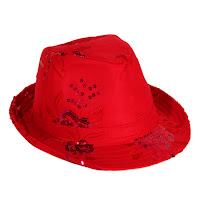
Now, one stewardess had really grasped the point. Beside a chic red skirt and sharp white blouse, she had gotten herself a terrific red hat. In that hat, she was the queen of the plane. Wherever she was, you could see her. Whatever she did, she looked great. She looked like an award winner - she looked like a star. And she did an exceptional job.

There point here is not just that pretty girls look good in red hats - that very same hat might not have worked on the other crew members. Crucially, she had chosen to wear that hat herself, and we had been told the crew were the best in the game. She was trusted and valued by her employer, and she was allowed to show it. The result? Everyone - crew and passengers - felt like stars.

PS Experienceologist Stephanie Weaver describes a great American Airlines system for rewarding crew. It even has a showbiz metaphor - take a look.
.

The presentation IS YOU!

Why you don't need Powerpoint - or at least, why you don't need it most of the time

Look, we are naturally blessed with the best presentation tools in the universe - the human face, voice and body. They are just fantastic.

But - the human eye is drawn to light. It's why we look into the fire, sit around the TV, and stare out at the sparkly ocean.

So if I'm using every part of my being, every muscle in my face, body and voice-box to sell you my idea, then the last thing I want is a large glowing rectangle behind my left shoulder.

That area of light will mesmerise you, it will suck out your attention through your eyeballs. Look at the image at the start of this post, who would look at the presenter's face or body language?


This is why you should think very carefully before deciding to use Powerpoint/Keynote or whatever.

(If I use an aid at all, I prefer a flipchart when I present. It is human-sized - I am pretty sure I could beat one in a fight. With preparation it can do almost anything Powerpoint can do, and most importantly it does not glow.)

For bigger spaces, you are going to need a bigger visual aid, I admit. But be very careful. One of the few people who gets this nearly right is Steve Jobs in his famous Apple product presentations. Looking at these from a theatrical point of view you will notice that Steve's huge Keynote screen only dominates when he wants it to dominate.

He uses black backgrounds, so there is almost no light from the screen - but Steve has a 15KW spotlight on him all the time. He wears black - like a Covent Garden mime artist - and his dark clothes emphasise his expressive face and hands. When he has finished showing us something, the screen quietens down to a simple image and we turn our attention back to Steve. And of course his slides are visually simple - often just two or three words which we can read in half a second.

The result? We are looking at Steve, not at the screen, while he is enthusing on his ideas.

The message is simple: always remember the presentation is YOU.

So avoid projected light if you can - or get yourself projected up there.


PS: If you really can't avoid using the Big Screen, then only use it when you absolutely have to, concentrating on bare bones facts (like Steve) and emotive images (like Seth Godin recommends). And as soon as you are done with each slide, TURN IT OFF!

Luvvies need love too

or, is the guy in the chicken suit truly happy, deep down inside?

In a private mail exchange recently (yes, it was with someone you have heard of,
but Mick Jagger told me - personally - never to name-drop), we were talking about the authenticity of face to face experiences.

It struck me that a lot of H2H experiences - like the Charmin one in Times Square - rely heavily on what the adult industry calls talent, but which you might call actors, cast members or poverty-stricken students. They are those people, often costumed, with whom the customers react directly, and whose enthusiasm, skill and interpersonal skills can make or break the experience.

Very often, these folks have to act in a scripted way - or at least are given a limited range of interactive options. Your chaps in the Charmin experience (which I like, by the way) are pretty much doomed to spend their workdays saying the same phrases over and over again, and smiling. A lot. Possibly while dressed as a toilet.

Now I too make my living by dropping my pants in amusing ways, and I know how crushingly dull it can be to go through the same routine over and over again. Sure, the audience is different every time, and sure their smiles and laughter can give you an immense
amount of energy, but eventually you just get fed up with the gig. If you are supposed to be happy about things - a common situation in experiential marketing - this is a problem.

"Never mind", I hear you cry, "for you are a gifted, professional thespian who is able to smile through the greatest suffering". A fair point, and here's a fiver, but where does that leave authenticity?

Let's be honest - there are few actors good enough to convincingly fake happiness at a range of two feet for several hours. And even if they are technically brilliant, you are not necessarily going to believe them. When Robert de Niro cries his eyes out on the big screen, his face, voice and tear glands do everything that they would do in a real trauma. But we know it is fake, because it's a movie, stupid! Similarly, when we see folks in comical animal suits smiling at us, we tend to to treat their emotion with scepticism.

So in the interests of authentic experiences, we need to make sure that the talent we use is showing genuine emotions. How can we do that?
  • Give your talent a chance to believe in the product. Truly believe. As I always expound in my presentation training, "if you don't believe what you are saying, shut up about it". The best way to help them love the product? By giving them the knowledge they need, and by bringing them into close contact with people who love it already.
  • Give your talent a chance to show emotion. Think about your costume design, and your staging. Are they going to allow the character the freedom of facial and physical expression that they need? Do you really need that mask? Wouldn't make-up be better? If someone absolutely must be dressed as a carrot, must it be the person with close-up customer contact?
  • Give your talent breaks. This is basic stuff here, but you know already that real breaks make all the difference. As does a decent wage, by the way. But not as much as when you...
  • Give your talent the freedom to shape the experience. Open any airport bookshop volume on motivation, and you will see that the thing which we dig most is the feeling that we are shaping our own actions and being valued for them. So encourage your folks to do it their way, not yours. Yes, they might drift from your CI, but they will glow while they are doing it and people buy from people, remember? So recruit good people, and let them play.
  • Give your talent applause. In a lot of experiences, the status of applause is unclear. If the experience is highly theatrical, applause may be welcome. However, if the experience design is more personal, more intimate, very immersive, continuous, or just plain dark, applause might not seem appropriate. Often, the customers are simply unsure if applause is "allowed". Nonetheless, your talent probably chose this profession - at least partly - for the roar of the crowd. Don't underestimate the importance of that buzz factor in keeping your folks motivated - and authentic.
If the pundits are right, and I think they are, then we are heading for a huge boom in the experience biz. This will mean more and more talent getting better and better at what they do. One day, there will be superstar talent, glitzy awards, and pawprints in the concrete outside the Pine and Gilmore University of Experience Art. And even before then, the best folks will insist on the above.

Keep your talent happy. Your customers will feel it if you don't.